



Paper on the floor
No live visibility
Tulip is an MES you assemble from ready-made apps, instead of one system a vendor configures for you. Your engineers pick what each line needs, tweak it to fit and IT still approves what goes live.
 ISO 9001:2015 CertifiedGxP-ReadyFedRAMP Moderate EquivalencyWorld Economic Forum Global Innovator
Next Step: Complete The Form Below To Book Your Free Tulip Demo & Get Pricing
10+ Years Helping Manufacturers Cut Defects And Speed Up Every Line

88% fewer quality escapes

40% less rework

70% less finished goods inventory

66% fewer defects

50% more production volume

30% faster packaging

20% shorter cycle times

30% faster teardown

60% less inspection time

250% faster builds

29% faster changeovers

43% productivity gain
Manufacturers have only ever had two options: a heavyweight MES that takes a vendor to change, or paper and spreadsheets that nobody can see into. Most plants ended up running both. So the floor lives on clipboards, changes sit weeks in the IT queue, and every audit is a fire drill.
No live visibility
Weeks for one change

Records pulled by hand


“Our MRB rack is empty”
Ian Avent, Boston Dynamics
“We didn’t need to wait on IT”
Ken McIntosh, Terex
Your process engineer opens the app, edits the step, and deploys it that afternoon. No more change request sitting in a vendor's queue while the line runs on a workaround.
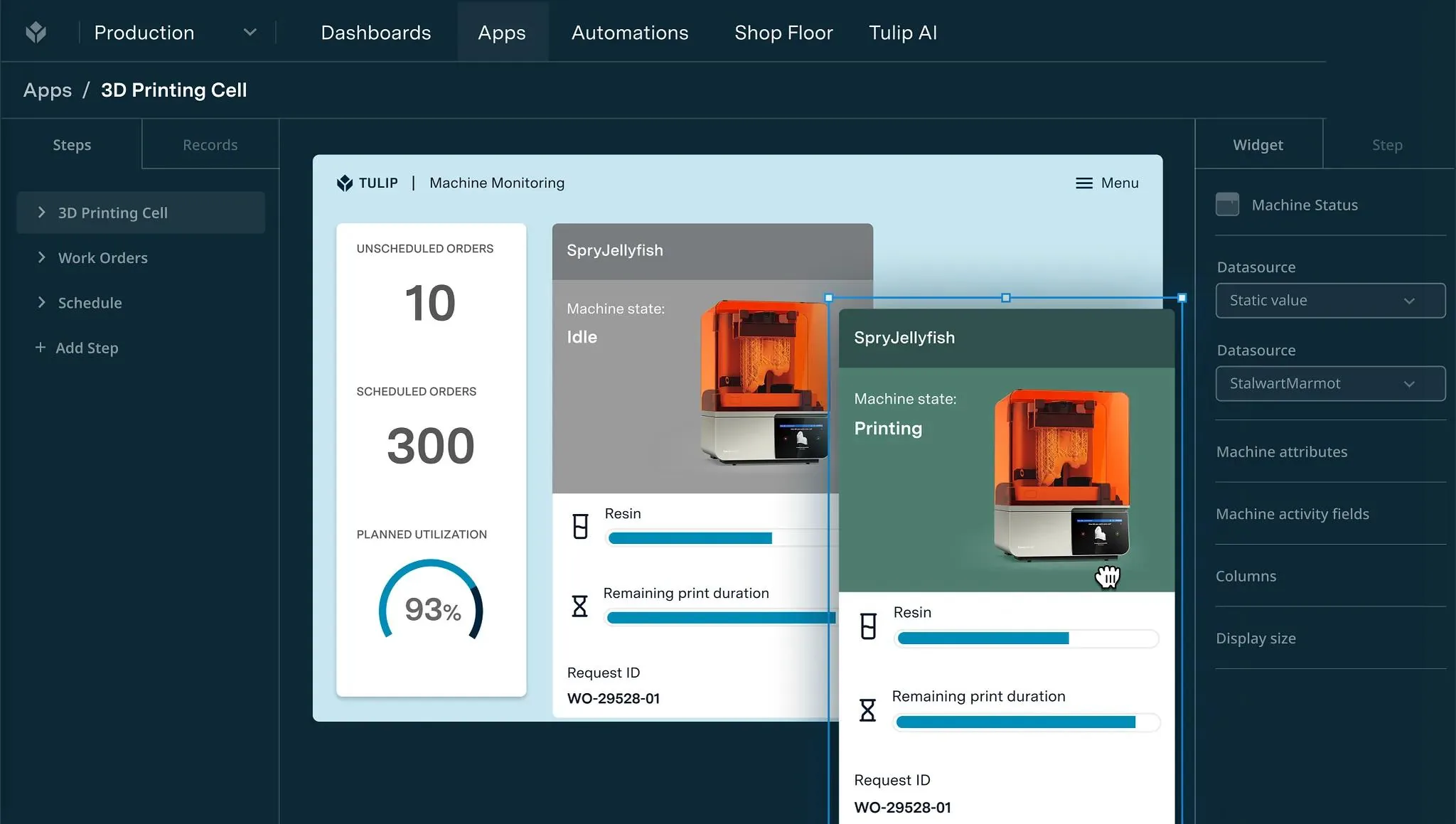

The run can't start until the first part passes inspection, and checks fire again as it goes. A failed check flags the part, routes it to rework and pings the shift lead, while the run is still going.

Edge Devices pull data straight off CNC machines and legacy equipment, and the Connector Framework syncs both ways with your ERP. No more typing readings into a spreadsheet at the end of shift.
 60+ ERP ConnectorsLiveTwo-Way Sync
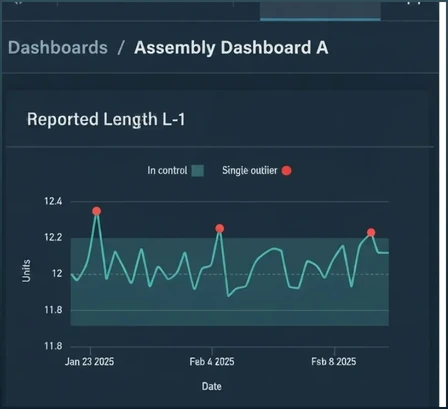
Work orders, cycle times, OEE and defects on one screen, live. No more calling the floor to ask where a job is, or driving between sites to find out what happened on nights.
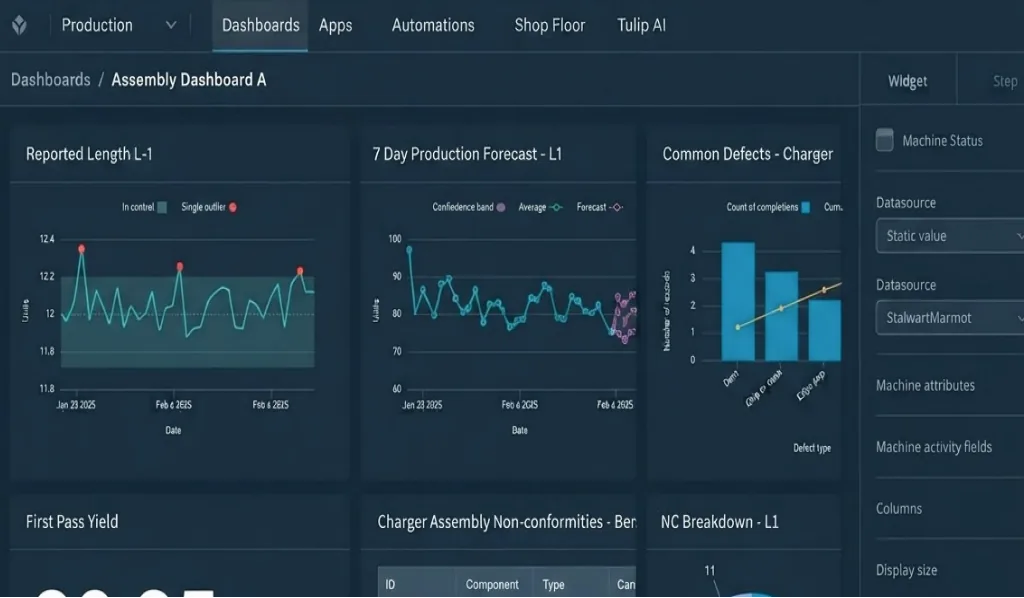

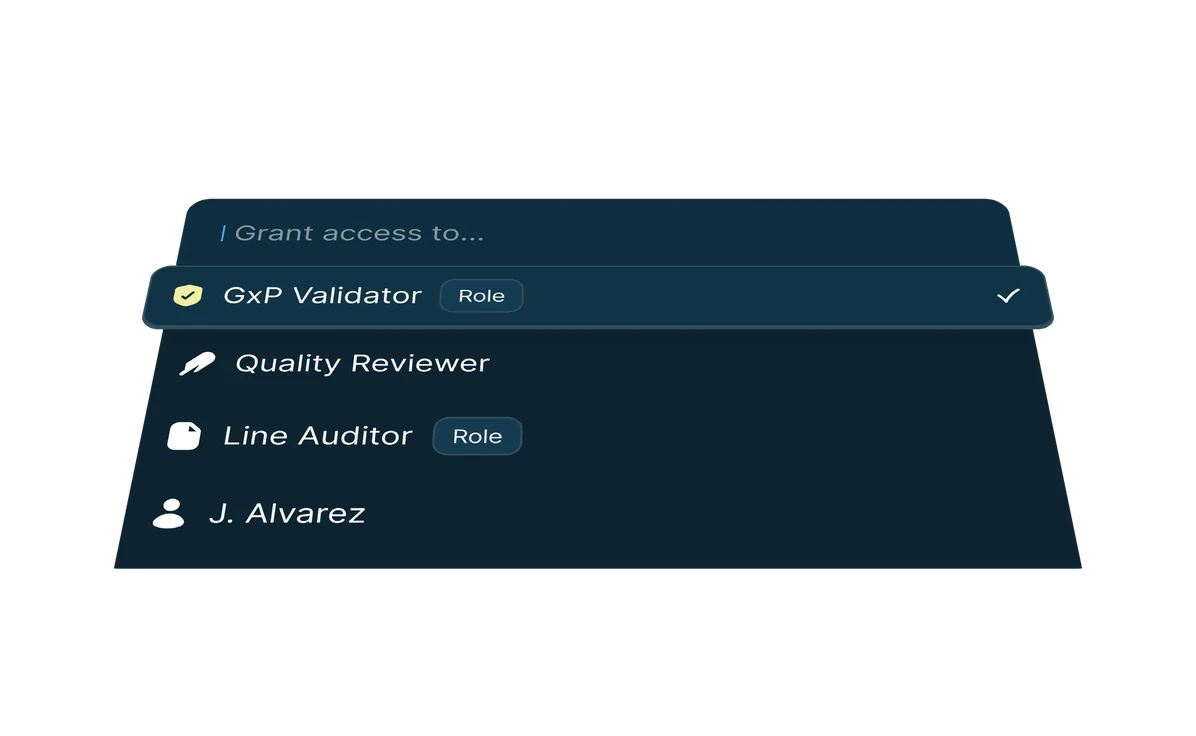
Every app inherits the roles, permissions and approvals your team already set, and every edit is versioned and logged. SOC 2 Type II, an ISO 9001:2015 certified quality system, and a full audit trail when an inspector asks who changed what.
Tulip runs alongside the systems you already have, so nothing gets ripped out on day one. Prove it on the process hurting most, then take it plant-wide when you're ready.


Average ROI
Average Full MES Rollout

Device integrations
On Gartner Peer Insights
“We have a full-blown MES, done customized for us without features we don't need”

 Verified Review
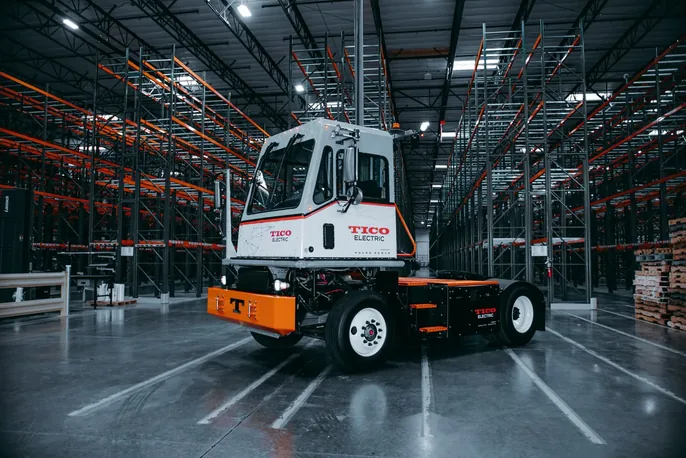
“Our legacy MES couldn't consume dynamic inspection criteria, but now we can tailor inspections to each profile”
 Verified Review
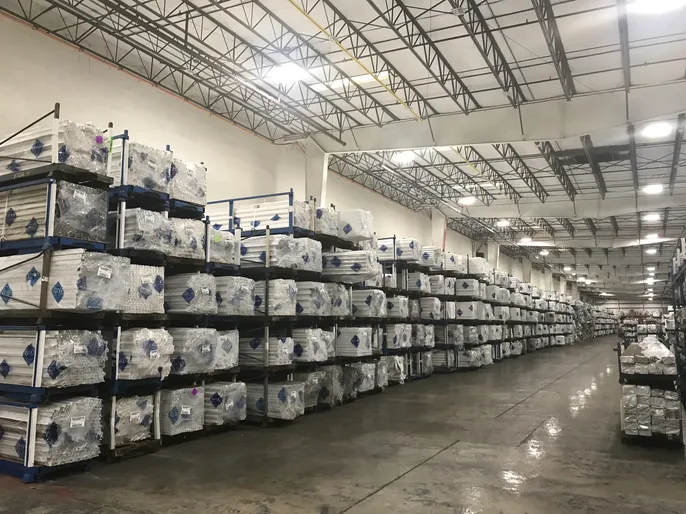
“Our spindle line assembly consists of over 16 stations. It’s important that the operator knows exactly which task they need to perform to complete the job.”
 Verified Review
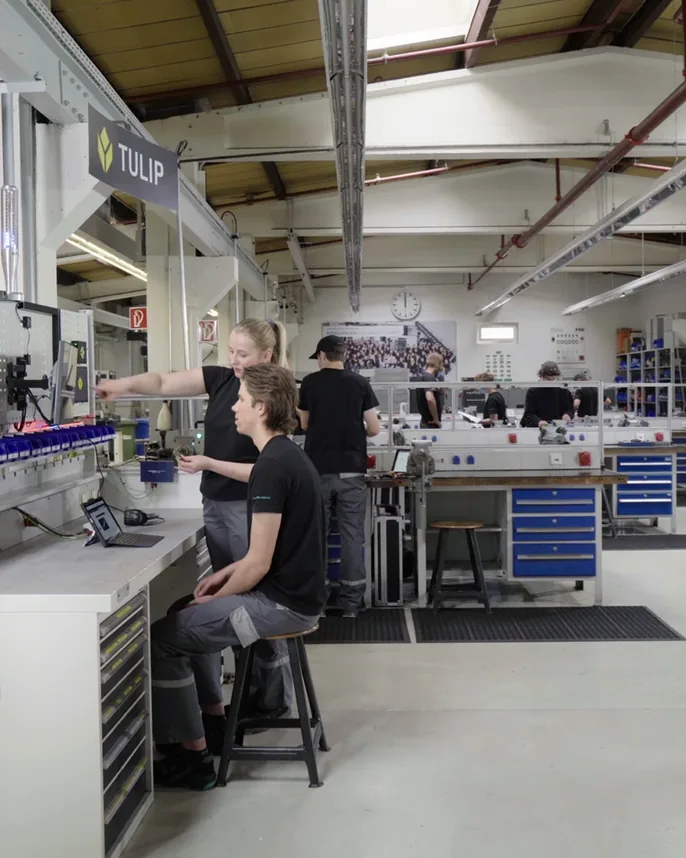
 Verified Review
“I was always that traditional MES, monolithic system guy… but then I saw firsthand the value of Tulip versus that approach.”
Verified Review“Since our initial deployment we managed to scale to over 120 packing lines across 17 sites in just under three months.”
Verified Review“Once we implemented Tulip our first pass yield went from single digits, to double digits, then to over 50% and now we’re in the 60s and 70s. It drove quality back into our production line.”
Verified Review“We had very positive feedback from all the lab analysts. They like the system. It’s really easy to use. Of course, they don’t have to transcribe any data anymore. And it’s a self-guiding system.”
Verified Review“Tulip is sort of the quintessential tool to enable augmented lean. Applying Tulip to changeover is exactly what we mean by lean digital.”
Verified Review“Our MRB rack is empty. We’re not scrapping nearly as many parts. We’re not reworking robots much further down the line because we’re catching it early.”
Verified Review“Tulip has allowed us to be nimble and change on a dime while still ensuring the same quality and aesthetic is met.”
Verified Review“The flexibility of Tulip makes it pretty easy to implement changes based on feedback from inventory personnel or people on the floor.”
 Verified Review
“One of the things that makes Tulip great for us is how easy it is to iterate quickly.”
 Verified Review
“At the beginning, it was truck numbers, stations, and parts. Now, it has quality aspects and how we are consuming parts. We have a full-blown MES - customized for us without features we don’t need.”
Verified Review“I often talk to my engineering group about how the limitation isn’t in the software, but it’s really in your imagination. With the ability to connect through all Internet of Things (IoT), we can really do some incredible things to improve production on the floor.”
Verified Review“It would have been an 18-month journey and about $2 million if we had done it the legacy way. Instead, we delivered it in six months and a fraction of the cost.”
Verified Review“You’re much better off when you have something like Tulip where we can say, ‘Fine, we will go and solve this problem for you, but we know that we can stick a couple of other Lego blocks on this.’”
 Verified Review
“We started with a one-week bootcamp. By the end of that week, apps were already being built, and people realized we didn’t need to wait on IT to deploy something.”
 Verified Review
“We built a system that captures every operator action and turns it into a complete, cGMP-compliant record. It gives managers full visibility into every batch in real time.”
Verified Review“When we give prospective customers a tour of our facilities, we typically show our Tulip apps and demonstrate how we are able to adapt rapidly with design changes. We get very positive feedback. I think it gives us a competitive advantage when it comes to winning bids for contracts.”
Verified Review“We set clear productivity targets and KPIs, and over time we can clearly see that we are harvesting those hours. It’s allowing us to do more with less.”
 Verified Review
“We can share the best practices with everybody in a common platform that allows us to scale up and move faster than we ever have before.”
 Verified Review
“We built our foundational processes within Tulip and we’re incorporating improvements with every release.”
Verified Review“For our digital transformation, capturing the value available from new technology is crucial. Tulip has been a game-changer for us because it provides us with a platform to create custom apps tailored to our specific needs.”
Verified Review“Traceability used to take more than 24 hours. Sometimes it took a week just to understand what happened.”
Verified Review“Once we integrated Tulip into our ERP, we weren’t guessing anymore. We knew exactly what quality checks needed to happen and when.”
Verified Review“MES implementations are monsters to deploy. They’re rarely done on time, they’re very monolithic, and they impact your plants.”
Verified Review“It’s completely paperless, and we estimate saving about a million dollars compared to a paper-based system or any other MES.”
 Verified Review
“We validated the apps, we have a validated data model sitting behind this, but the business can then take these applications and start building their forms.”
Verified Review“We have lots of instances where, out of a Kaizen, they want to make a change or they want to do an app and that can literally be done overnight. We can do it overnight and we can affect the production floor on the next day.”
 Verified Review
“Tulip has fundamentally changed how we respond to engineering shifts and customer requirements. This platform isn’t just about efficiency; it’s about building a responsive manufacturing capability that keeps us at the forefront of innovation.”
 Verified Review
“Tulip’s platform offers unparalleled flexibility, allowing us to adapt our workflows quickly and efficiently to meet our ever-evolving business needs.”
 Verified Review
“…one of our interns developed a Tulip application for our inventory control room to improve our manual labeling process. Previously, the process required complex calculations that took about five minutes to complete. Thanks to the Tulip app my intern created, this task now takes less than 30 seconds…”
 Verified Review
“Tulip has helped carry us through the past two years and helped us be agile while in production.”
Verified Review“Composability drives sustainable excellence.”
Verified Review“This has saved us countless times from a part skipping a critical step - and at some point in our process, you can’t go back.”
Verified Review“We’ve seen our quality issues drop dramatically because the machine can’t enter production without a first-piece inspection.”
Fill in the form, then book a time that suits you. We’ll walk you through how Tulip fits your lines and cover what it costs.
Everything else keeps running as it is. No code to build the app, so the engineer who knows that line has it live in days.
Less material in the bin, an audit trail written before the inspector asks, and no change waiting on a vendor ticket.
 Tulip home

Yes, and the quickest way to check is against your own RFP list. It covers production tracking, digital work instructions, SOP enforcement, quality inspection, traceability, electronic batch records and device history records. The part that is genuinely different is who changes it after go-live. A legacy MES is configured by its vendor, so a line change waits in a queue, and here your own engineers make it. Mike Rousch, production operations director at TICO Tractors, calls what he runs "a full-blown MES", and his plant doubled production on it.
Configuring a legacy system is real work, and it fits the line you have now. What it will not do is change the structure underneath, so you get the changes the vendor built a setting for, and anything past that is a quote and a queue. Watch for capability that unlocks only at a higher tier or as an add-on. The measure is the gap between "we need to change this" and "it is live and validated". Amandio Gomes at Avon Technologies says a Kaizen change "can literally be done overnight".
You do not have to. Most teams run Tulip alongside what they already have, so your MES keeps doing what it does well while Tulip picks up the processes it was never built for and the data that does not move between systems. Capabilities can shift across over time, at whatever pace suits you. Bloom Energy did replace theirs outright, more than 230 stations in under eight months, but that is a choice rather than a starting point.
Fair question on a purchase this size. Gartner listed Tulip as a Representative Vendor in its 2025 Market Guide for Manufacturing Execution Systems, and Tulip currently holds 4.5 out of 5 from 77 Gartner Peer Insights reviews. Forrester measured 448% ROI over three years. AstraZeneca, Eli Lilly, Stanley Black and Decker, DMG MORI and Terex all run production on it. Then check what the Tier 1 vendors publish about their own customers, their timelines and their pricing.
Your first app can be live in days, and Terex had their own people building apps by the end of a one-week bootcamp. A full MES rollout averages about three months, and Forrester put it at three to six depending on your size. Maintaining it is the easy part, because your engineers edit and deploy the change themselves rather than raising a vendor ticket. Avon Technologies priced the legacy route at an 18-month journey and about $2 million.
We give you the numbers on the call, scoped to your sites and how many devices run Tulip. On building it yourself, the apps are the easy part. The hard part is approval workflows, version control, role permissions and an audit trail that survives an inspection, and you own all of it forever, including the on-call. Avon Technologies priced the legacy route at an 18-month journey and about $2 million before they moved to Tulip and delivered in six months.
Not the whole system. Changes are versioned and routed through the approval workflow your SOP already defines, so the assessment is scoped to what actually changed. Every record carries a full audit trail with electronic signatures, and you can roll back to the previous release. Outset Medical built a validated eDHR in 60 days, turned 2,700 pages of documentation into 90 validated apps, and cut QA review by 93% using review by exception.
Yes, and your ERP keeps owning orders, materials, specifications and finance. Tulip owns execution on the line and writes the completed record back, so you are not running two versions of the truth. There are 60+ pre-built connectors for ERP, PLM and QMS, including SAP S/4HANA, and 700+ device integrations, with OPC UA and MQTT native so most CNC and PLC estates connect without custom code. VEKA wired their quality checks into their ERP, so every check reflects the order actually running.
Tulip runs in the cloud on AWS, with data encrypted in transit and at rest, role-based access, SSO and SAML, and network segmentation options. There is no on-premise deployment today. For sensitive or export-controlled work there is AWS GovCloud, and a FedRAMP Moderate Equivalency environment for CUI. Tulip captures operational data, so process steps, inspection results and machine outputs, while your design files and core IP stay in the systems that hold them now.
Your team owns them, and in practice that is the engineer who runs the line. Every change goes through the same build, review and approve cycle before it reaches production, and the previous version stays available so you can roll back. Tulip University and the app Library come with every plan, so a new builder has somewhere to start rather than a blank screen. Ken McIntosh at Terex said his people "didn't need to wait on IT to deploy something" by the end of week one.
Yes, and you want them there for the first conversation rather than the tenth. IT sets access, permissions and the approval routes once at the platform level, and every app your team builds afterwards inherits them. That is a single review instead of a ticket for each change, which is usually what IT wanted anyway. Terex started with a one-week bootcamp and had apps being built by the end of it.
Nothing gets ripped out. Tulip runs alongside the systems you already have, so you start on one line while everything else keeps running the way it does today. VEKA began with a single pilot line, then expanded across their Pennsylvania plant, then Texas, Nevada and North Carolina, keeping the same process underneath while each site tailored what operators saw on screen.
You fill in the form and book a time. We walk through how Tulip fits your lines, show the platform running on a process close to yours, and price it against your sites and how many devices would run it. You will leave knowing what a first line looks like and what it costs. Nothing changes on your floor until you decide it should.